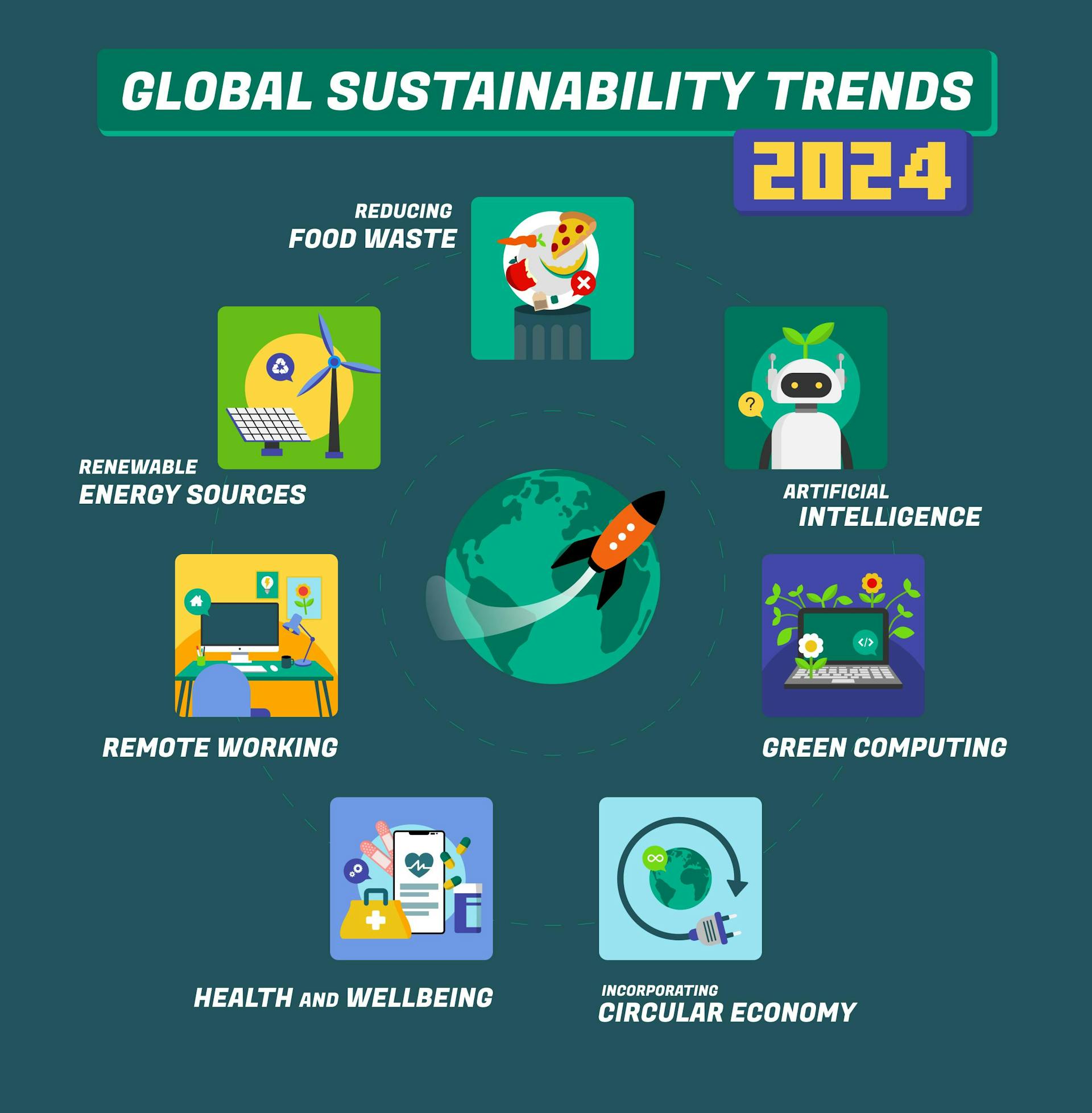
Workplace practices have significantly changed over recent years than it has been in the past few decades. Flexible and hybrid working arrangements are now transforming from temporary measures to permanent fixtures and the ripple effects are still present across organisations city, careers, and cities. For some, the change can be a source of joy. Others, it has raised genuine questions about productivity, culture, and progression. What is clear is that we cannot go back to the traditional way of working. Here are 10 remote working trends which are transforming the contemporary workplace heading into 2026/27.
1. Hybrid Work Is Now The Predominant ModelThe debate regarding fully remote instead of fully in-office has ended up on a pragmatic middle place. Hybrid workplaces, where employees are able to split their time between home and an office is now the standard model in all knowledge-based industries. The specifics differ from a structured two or three day office requirements, to highly flexible and flexible arrangements designed around team needs. What most companies have accepted is that rigid daily office attendance of five days is becoming difficult to justify for employees who have shown that they can provide results from any location.
2. Asynchronous Communication Takes PriorityAs teams expand geographically and time zones change The notion that everyone must be online simultaneously is becoming less and less true. Asynchronous communication, in which messages announcements, updates, as well as decisions are logged and responded to in the individual's time is becoming an essential corporate priority rather than being a last-minute thought. Software that is built around async workflows are increasing in popularity, and the shift to trusting individuals to manage their own time, rather than watching their online activity is picking up speed.
3. AI-powered productivity tools shape daily WorkThe introduction of AI to everyday tools has increased faster than believed. From meeting summaries and automated task management, to AI writing assistants and intelligent scheduling. The new toolkit available to remote workers in 2026/27 has a starkly different look from even two years ago. The biggest change is not a single device but the impact of AI controlling the administrative part of work. This allows workers to focus more time on the tasks that require human judgment and creativity.
4. A Home Office Becomes A Serious InvestmentYears into widespread remote working an improvised table arrangement is now giving way to professional-designed office spaces. Workers and employers alike consider the workplace at home setting as an investment in infrastructure worth investing in. Acuity-friendly furniture, professional lighting, acoustic panels, as well as high-quality audio and video equipment are increasingly common rather than premium. Some employers now provide dedicated personal allowances to home offices as a part the benefits packages they offer believing that a well-equipped remote worker is a more effective one.
5. Digital Nomadism Gains Mainstream LegitimacyThe option for a lifestyle that was primarily associated with self-employed or freelancers is becoming a accepted working method for employees of established companies. An increasing number of companies provide flexible policies for location that permit employees to work in several countries over extended time frames, provided that tax and compliance conditions are adhered to. The infrastructure for this type of arrangement, from co-working networks to nomad visa programmes that are provided by many nations, continues to expand and mature.
6. Remote Work Culture requires thoughtful DesignOne of the most consistent challenges of distributed working is sustaining a coherent team culture when people rarely or never interact physically. The most successful companies are realizing that culture in a remote workplace is not something that comes naturally. It needs to be created. This involves intentional onboarding process along with regular touchpoints structured and regularly scheduled, virtual social rituals, and explicit frameworks for recognition, and development. Companies that view culture as something that is only happening in the office are losing ground both in retention and engagement.
7. Cybersecurity for remote workers is tightens SignificantlyThe proliferation of remote work greatly increased the amount of attack opportunities for cybercriminals and the response of organizations has been very positive. Zero-trust security systems, mandatory VPN use, monitoring of endpoints and multi-factor authentication are now the norm rather than ad-hoc security measures. Security training for employees has now become a recurring requirement rather than an induction event that is only once-off an indication of the fact remote workers who operate outside of access to corporate networks can be vulnerable and also a possible first protection.
8. " Four-Day Work Week Gains TractionThe pilot programs testing a 4 day week of work have consistently produced favorable results across several industries and countries. More and more organisations are moving into permanent deployment. It is the premise that output and concentration matter more than time spent, is in line with the notion of remote working. For companies competing for employees in a world which flexibility is a major importance, the four-day working week has evolved from a radical experiment to become a real differentiation.
9. Performance Measurement Shifts To ResultsControlling remote teams through monitoring activities, tracking copyright times or observing screen usage has proved impractical and untrustworthy. A shift to outcome-based management, in which employees are evaluated on the outcomes they produce rather than how visually busy they appear in the workplace, is among the most significant changes in culture remote work has been accelerating. This demands clearer goals, regular check-ins to monitor progress, and supervisors who can operate without control. It also demands greater accountability for employees.
10. The Mental Health And Boundaries Become Organisational ResponsibilitiesThe blurring of home and office the remote work environment can result in has brought border-setting and mental health into the agenda of organisations. Burnout and isolation as well as constantly-on working habits are recognized as risks rather than personal failures and employers are more likely to address these issues structurally. Work-related policies, accessibility to medical support for mental health, as well as active manager training are becoming standard elements of what a responsible remote friendly employer can look like in 2026/27.
The process of change at work is constant and uneven in different fields, roles and individuals undergoing it in very different ways. What these trends are sharing is a shared direction: towards more flexibility, conscious communication, and a fundamental shift in what it means for a person to become productive. The companies that seriously engage in this rethinking are those who are developing workplaces that can be considered to be part of. For further context, explore the leading kiwireporter.nz/ and find trusted analysis.
 Top 10 E-Learning Shifts Changing The Way We Learn In 2026
The education industry is undergoing a paradigm shift that is as profound as anything else in the past, driven by technology that is changing not just the way that learning is conducted but also what means to be a learner, what's important to know, and who gets to be the ones doing it. The digital learning landscape of 2026/27 is located at the intersection of new technologies, such as artificial intelligence, disruption in credentialing shifts in demand for labour and the growing realization that the traditional method of education that was based on a single-point approach and followed by years of static knowledge cannot be adapted to the world that evolves as rapid as the current one. Here are ten of the online learning trends that will transform education into 2026/27.
1. AI Instructors offer genuinely individual LearningThe promise of personalized education with instruction tailored to the personal learning pace, style of learning gap in knowledge and needs of each student has existed for decades without ever being made accessible to the masses. AI tutoring technology is making it possible. Platforms that can adapt in real time to the way students respond, spot problems before they have a chance to become permanent and adjust the difficulty in a dynamic manner and explain the concepts in different ways until one lands are producing outcomes of learning which compare favorably with traditional methods of instruction. The most significant impact is in increasing access to the kind of individualised attention that was historically available only to those with financial means for private tutoring.
2. Micro-Credentials as well as Skills-Based certifications gain GroundThe traditional university degree isn't disappearing, however its authority in the field of credentialing is beginning to erode. Employers in a variety of industries are putting greater importance on the demonstrated abilities and relevant certificates, as opposed to the kind or quality in the degree you have earned. Micro-credentials, which are short-focused courses that validate specific competencies, are being issued by universities, technology platforms and professional bodies as well as employers themselves. The problem is to create a system in which these credentials can be read to verify, authentic and reliable across different boundaries of an organization. Blockchain-based credential verification along with the increasing employers' recognition of specific platform certifications have both contributed to solving this problem.
3. Lifelong Learning becomes a professional NeedThe accelerating pace of change in virtually every field will mean that knowledge and capabilities gained during the initial stages of education have lesser usefulness than they ever did. Continuously upskilling and reskilling is not just optional for the ambitious, but they are necessary i thought about this for everyone looking to stay relevant in the marketplace that is being reshaped by automation and AI more quickly than any other technological transition. Online learning platforms provide the principal platform on which this ongoing professional development is happening, and the market for adult learning is growing significantly as employers, employees as well as the federal government all invest in building it.
4. Immersive Learning Environments that use VR and SimulationSimulation-based learning and virtual reality are becoming more than just a novelty and transforming into effective pedagogical efficacy in particular areas. Medical students rehearse surgical procedures within virtual environments prior to touching a patients. Engineering students dismantle and build the virtual machines. Learners of languages practice conversations in the real world through simulations. The evidence-based basis for immersive learning for high-stakes skill development is building, and the cost of the equipment needed is decreasing. For learning scenarios where the chance of making errors in real-world settings is high, or where access to real-world environments is restricted, immersive simulation has proven its value.
5. Social And Cohort-Based Learning Reclaims GroundThe beginning of online learning was an individual experience, where the learner was solitary and surrounded by content. The recognition that much of what makes education valuable is social, the discussion, debate, peer feedback, shared struggle, and relationship-building that happen between people learning together, has driven investment in cohort-based formats that recreate something of the classroom dynamic in an online context. Sessions that revolve around live interaction in collaboration with peers, group projects, and shared accomplishments are creating completion rates as well as learning outcomes that are far better than self-paced solo format. Learning in a community is increasing recognized as an element rather than as a necessary condition.
6. Employer-led education expands significantlyDisappointed by the disparity between the educational outcomes that traditional schools provide in terms of what they actually require increasing numbers of large companies are investing in creating the learning programs to help students acquire the skills they require. Internal academies, partnerships with universities and online platforms as well as sponsorship learning pathways, and credentials programmes created in partnership with industry are all growing. The line between work and education is blurring, where learning takes place throughout in a professional career instead of being only concentrated at the beginning. Learners who are supported by employers typically provides direct routes to employment that conventional degrees do not guarantee.
7. Learning Analytics allow earlier and more Effective InterventionThe information generated from online learning platforms offer the most detailed picture of how learners learn, areas in which they struggle and what keeps them motivated and what can be a predictor of dropout as well as other data that no traditional classroom could rival. Learning analytics tools make this data actionable, allowing educators and developers of platforms to identify learners at risk for disengagement before they are able that they can intervene and understand which content and pedagogical approaches have the greatest impact on the learner profile, and in the process of continuously improving course design based on aggregate evidence instead of intuitive. If properly utilized, analytics allow online learning to be more receptive and more efficient over time.
8. Language Learning is Transformed By AI Conversation PartnersLanguage acquisition requires practice in realistic situations and has been the hardest thing for self-directed learners to access. AI conversation partners who respond immediately, adapt depending on the level of learning, correct errors constructively, and create a vast array of different scenarios in a conversation are revolutionizing the way that self-directed language learners. The performance of language practice with AI has reached a stage where you can have meaningful conversational skills made without a human partner, dramatically expanding access to effective language training for the hundreds of millions of people all over the world who would like it.
9. Content Abundance Boosts Value the Curation and GuidanceThe quantity of top-quality educational content online is now so massive that the problem of lack of education has changed fundamentally. There is no longer a bottleneck in access to content but the ability to define what is important to learn, in what order, and in what resources. The most sought-after online learning experiences by 2026/27 are those that provide not only information but also understanding, guidance, path design, and expert assistance to help learners navigate through the their way through the maze of content. The platforms and teachers which are successful are mainly those which help users learn to learn, not just the ones that provide information in a timely manner.
10. Education Technology is under scrutiny In evaluating the resultsThe rapid growth of the industry does not have been accompanied by constant, rigorous assessment of whether its products actually provide the learning outcomes they claim. The growing number of studies and attention from regulators as well as consumer scepticism is demanding higher standards of proof from the learning platforms, programs for credentialing that offer credentialing, as well as AI technology for tutoring. The most credible players in the market are reacting by investing in independent outcome evaluation, transparent disclosure of employment and completion details, and designing a product which prioritises real learning over engagement metrics. The push for accountability is healthy for this industry, whose promise is based on the reality of delivering what it promises.
It has always been a reflection of society as well as the mechanism to change it. The evolving trends in learning online of 2026/27 reflect a world that is pondering what people require to know what they should know about learning best and who should get access to the instruments that enable learning. The overall direction is encouraging towards more access personalized learning, more individualisation, and an honest examination of what the purpose of education actually is. The main challenge is to ensure this transformation is beneficial to everyone, instead of merely making existing advantages more efficient to accrue. For additional insight, visit the top newsbasis.de/ and get reliable analysis.